5 Stunning Tile Flooring Ideas for Florida Homes
Every homeowner in Tampa or Sarasota eventually faces the same moment: they love the look of a floor they saw in a magazine or on Instagram, they order it, they install it, and six months later the grout is stained, the finish has dulled, or the whole room feels disconnected from the screened lanai they spent $40,000 building.
The problem is not the tile. The problem is that most tile inspiration content is written for Seattle or New York, not for a home two miles from Siesta Key Beach where quartz sand, 85% summer humidity, and barefoot living are facts of daily life.
Here in Florida, tile flooring has to look incredible and survive subtropical conditions. This guide covers five tile ideas that actually deliver both, with specific guidance for Tampa and Sarasota homes. Before you commit to anything, use our Room Visualizer to preview these looks against your actual space.
In This Guide:
- Why Florida Living Rooms Destroy the Wrong Tile
- Idea 1: The Seamless Indoor-Outdoor Porcelain Floor
- Idea 2: Large-Format Warm Neutral Tile for Open Floor Plans
- Idea 3: Modern Organic Texture — Natural Stone-Look Porcelain
- Idea 4: Terrazzo Revival for Statement Living Rooms
- Idea 5: Herringbone and Pattern Tile for Entryways and Statement Zones
- What Tile Flooring Actually Costs in Tampa and Sarasota
- Living With Tile in Florida: The Maintenance Reality
- How to Choose a Tile Installer in Tampa or Sarasota
- FAQ: Tile Flooring in Florida Living Rooms
What Can Go Wrong With Tile Flooring?
Before the ideas, some honest context about what your floor is up against.
The annual humidity swing makes things more complicated. Summer relative humidity here regularly hits 82-85%. Winter drops to 58-65%. That 20-point seasonal swing causes expansion and contraction in any material on your floor, including grout. Over time, grout that was not installed with proper expansion joints will crack. It is not a question of if; it is a question of when.
Add to that the silica quartz sand from Siesta Key and Gulf-area beaches. This sand is extraordinarily fine and hard. Tracked inside daily, it acts like micro-grit sandpaper on glossy tile finishes. High-gloss floors that look stunning on install day show scratches and dull patches within one to two seasons.
The good news is that tile, when chosen correctly, outperforms every other flooring category in this climate. The National Tile Contractors Association (NTCA) recommends porcelain with a PEI hardness rating of 4 or 5 for residential living areas that see regular foot traffic and outdoor access, and that guidance holds especially true in Florida coastal homes.
Pro-Tip from the Bob’s Flooring Team: In South Tampa neighborhoods like Palma Ceia and Davis Islands, we consistently find subfloor moisture readings 10-15% above what you’d see inland. These areas sit on older, shallower slabs closer to the water table. Before we install any tile in these homes, we run a calcium chloride moisture test and, if needed, apply a moisture mitigation membrane. Skipping that step is the single most common reason tile jobs fail in this market.
Florida Tile Homeowner Reference Card
Climate: Humid subtropical (Köppen Cfa). Annual rainfall ~52–55 inches. No freeze-thaw cycles.
Humidity: Summer peak 82–85% RH. Winter low 58–65% RH. Seasonal swing of ~20 percentage points — enough to crack grout without proper expansion joints.
Soil: Hydraquent and Spodosol — sandy, poorly draining, high lateral moisture migration. Vapor drive through slabs is the norm, not the exception.
Slip Standard: For outdoor/lanai tile, look for DCOF ≥ 0.42 (wet, level surfaces) per ANSI A137.1. Ask your retailer for the specific rating.
Subfloor Flatness: TCNA requires no more than 1/8-inch variation in 10 feet for tiles 15 inches or larger. Older Tampa Bay and Sarasota slabs frequently require leveling before large-format install.
Grout Resealing: Non-epoxy sanded grout in Florida living rooms with outdoor access: reseal every 6–12 months. Epoxy grout: no sealing required, but must be professionally installed.
Cost Range (installed): Porcelain $6.50–$22.00/sqft | Stone-Look Porcelain $7.50–$16.00/sqft | Natural Stone $11.00–$25.00/sqft
Source: Bob’s Carpet & Flooring, 55+ years installing floors across Tampa Bay and the Sarasota corridor. These prices are only estimates based on typical jobs. Always get a quote from our experts to get an accurate estimate for your project.
Idea 1: The Seamless Indoor-Outdoor Porcelain Floor
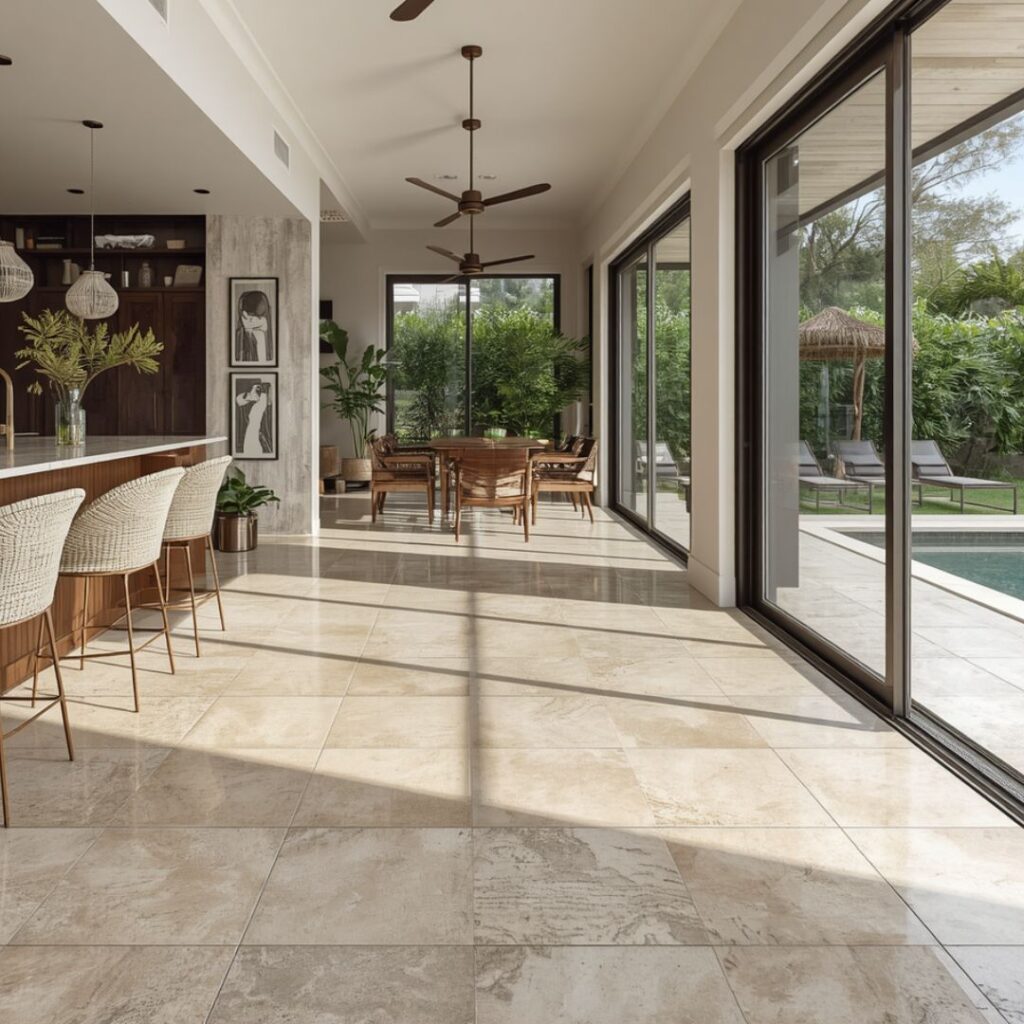
The most requested tile concept in Tampa and Sarasota right now is not a specific color or pattern. It is a feeling: the sensation that your living room and your lanai are one continuous space.
“The number one thing we tell Tampa and Sarasota homeowners is this: your tile choice has to work with your lanai, not just your living room,” says Bob’s Carpet & Flooring. “You pick the finish for the outdoor side first, because that’s where slip resistance and UV fade matter most, and then you match the interior to it. That’s how you get that seamless, open feel everyone wants.”
To execute this look, you need porcelain tile rated for both indoor and outdoor use. For any tile going on the lanai or pool deck, look for a Dynamic Coefficient of Friction (DCOF) of at least 0.42 for wet level surfaces per ANSI A137.1, with higher values recommended for pool surrounds and ramps. Ask your retailer for the specific DCOF rating on any tile you are considering for outdoor use. For the interior, you can use a slightly smoother version of the same tile body to maintain the visual match while keeping the living room comfortable underfoot.
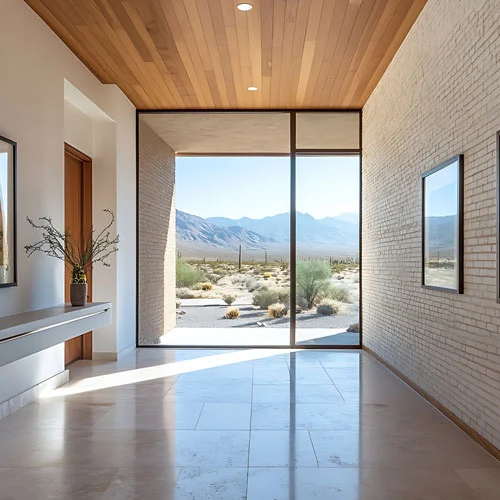
Large-format sizes, 24×24 inches or 24×48 inches, are ideal because fewer grout lines mean the visual flow from indoors to outdoors is uninterrupted. The most popular colorways right now are warm sand, greige limestone, and pale travertine-look finishes. These neutrals photograph well, age gracefully, and do not show Siesta Key sand between cleanings.
Want to see how this look works in your home before you visit a showroom? Try the Bob’s Room Visualizer to preview tile options against your actual space.
What to watch for: Not all “matching” outdoor tiles are manufactured to the same thickness. Confirm that your indoor and outdoor selections have compatible thicknesses before ordering, or plan for a transition strip at the threshold.
Idea 2: Large-Format Warm Neutral Tile for Open Floor Plans
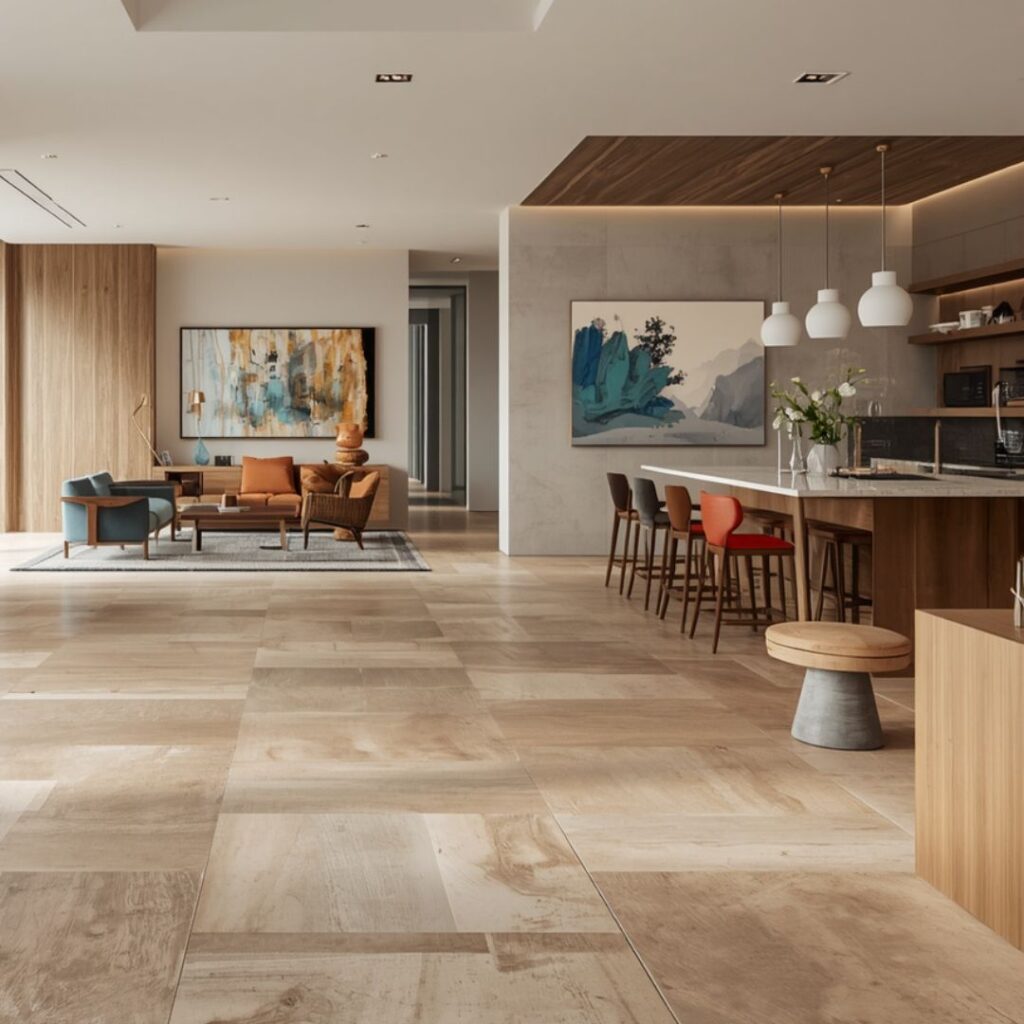
Florida open floor plans are made for large-format tile. The fewer grout lines you have, the cleaner the floor reads, and the bigger the space feels.
“Large-format tile has changed the game for open floor plans down here,” says Ashlie. “A 24×48 plank tile with minimal grout lines doesn’t just look cleaner; it actually performs better in Florida because there’s less grout to absorb moisture and stain. We’re seeing it replace wood-look vinyl in a lot of mid-range remodels.”
The 2026 palette shift in Florida is real. The all-white coastal look that dominated for a decade is giving way to warm earthy neutrals: honey tones, clay and taupe, matte sand-colored tile, and limestone-inspired finishes. These palettes photograph warmer, feel more grounded, and hide the particulate that constantly blows in from outside in a subtropical climate.
For living rooms that open into a kitchen, a 24×48 porcelain plank tile laid in a linear pattern creates a sophisticated, gallery-like floor that makes both rooms feel intentional rather than disconnected. For living rooms with a feature wall or fireplace, a 36×36 square in a staggered offset keeps the floor from competing with the architecture.
Practical note: Large-format tile requires a very flat subfloor. The TCNA (Tile Council of North America) standard for tiles 15 inches or larger is no more than 1/8-inch variation in 10 feet. On older Sarasota slabs, especially those built in the 1970s and 1980s, this typically requires a self-leveling underlayment before install. Budget for it.
“We went with large-format porcelain all the way from the kitchen through the living room and out to the lanai. The Bob’s team helped us find a finish that reads as one continuous floor across all three spaces. The open feel it created is exactly what we were hoping for.” — Verified customer, Palmer Ranch, Sarasota — Large-Format Porcelain Tile
Idea 3: Modern Organic Texture — Natural Stone-Look Porcelain
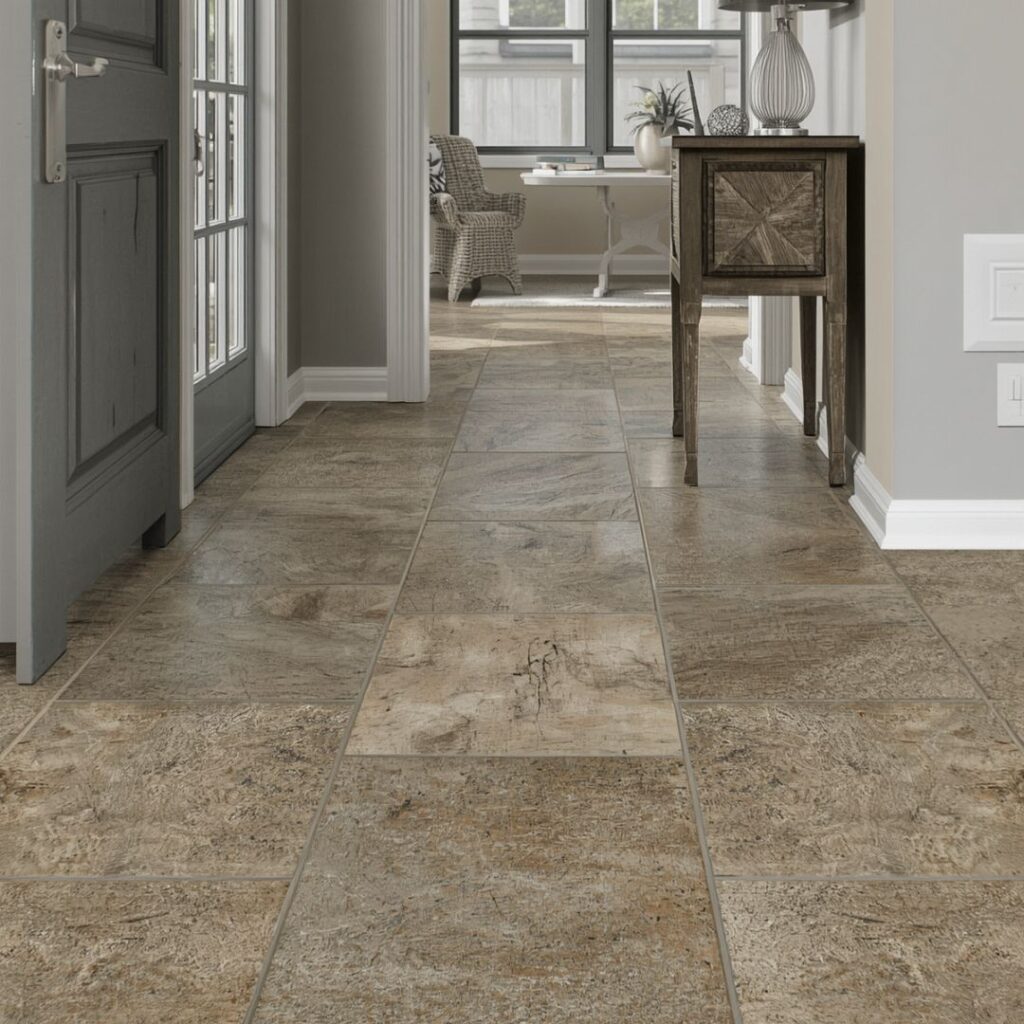
Natural stone has always been aspirational in Florida luxury homes. The problem with actual limestone, travertine, and marble in Tampa and Sarasota is maintenance. In Florida’s humidity levels, real stone requires sealing every 12-18 months, is prone to etching from pool chemicals tracked inside, and is vulnerable to the moisture vapor discussed above.
Natural stone-look porcelain solves this completely.
Today’s high-definition inkjet printing technology produces porcelain tile that replicates the veining, texture, and depth of travertine, limestone, and sandstone at a fraction of the maintenance cost. The tile body is vitrified, meaning it is fired to a water absorption rate below 0.5% per ANSI standards, so it repels moisture vapor, resists staining, and holds its finish for decades.
The specific looks driving searches in Florida right now include limestone-inspired flooring, structured-finish and relief-texture porcelain tile, and “raw” finish porcelain with irregular surface variation. These tactile finishes perform a secondary function in a Florida home: they hide the inevitable fine sand and dust that accumulates between cleanings.
For Westchase, Carrollwood, and New Tampa homes where the interior design leans transitional rather than coastal, a soft travertine-look 18×36 tile in a warm ivory or cappuccino finish pairs beautifully with natural wood cabinetry and warm-toned furniture.
The honest tradeoff: Textured matte finishes are easier to live with in Florida, but harder to clean than polished surfaces. A slightly raised texture means mopping requires more passes. Use a microfiber flat mop and a pH-neutral cleaner, not a string mop, and you will not have issues.
Idea 4: Terrazzo Revival for Statement Rooms
Terrazzo is not a trend. In Florida, it is heritage.
Terrazzo floors were the dominant flooring choice in Florida residential construction from the 1950s through the 1970s. Thousands of mid-century homes in the Meadows in Sarasota, in South Tampa, and throughout the Gulf Gate area still have original terrazzo under carpet that was installed over them in the 1980s. Homeowners who pull that carpet up are finding floors that have survived 50 years of Florida humidity in better shape than what was installed on top.
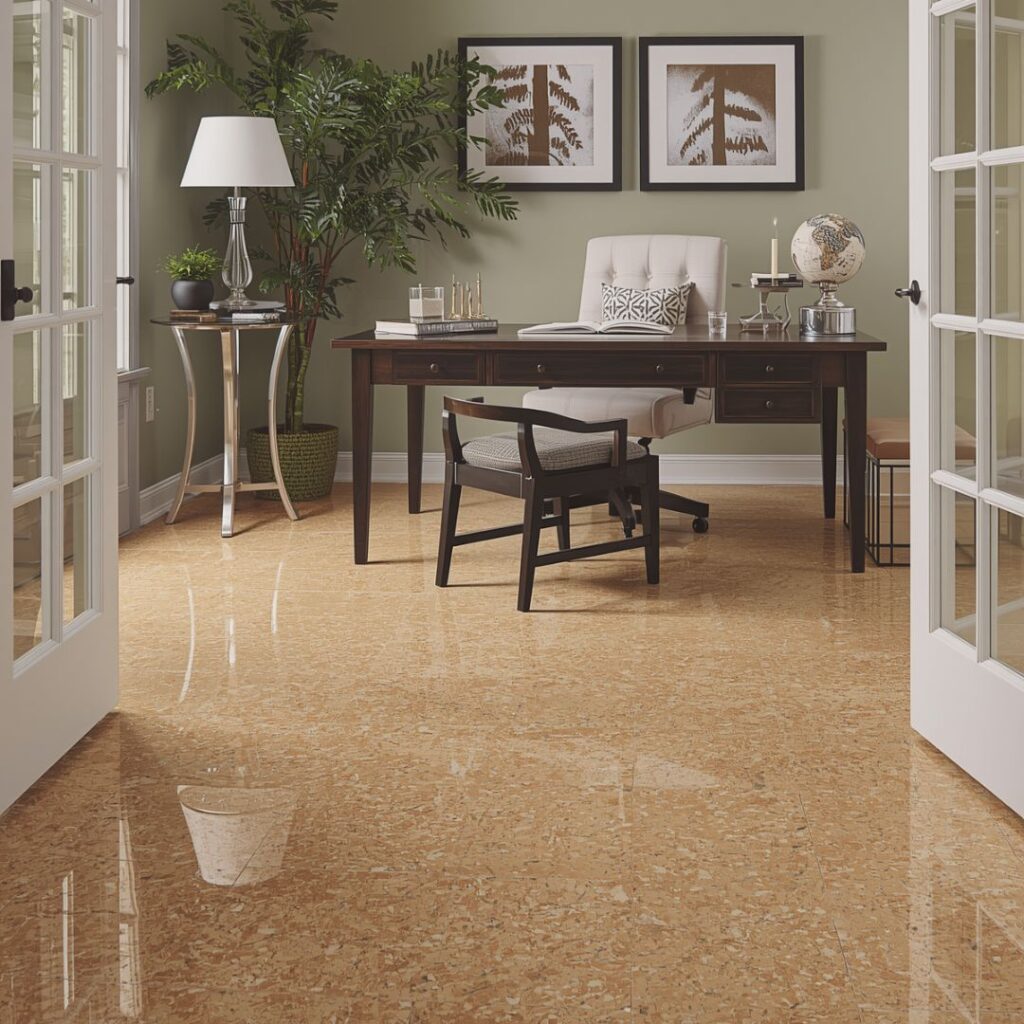
Modern terrazzo-look porcelain tile brings that heritage aesthetic into 2026 without the specialized grinding and sealing that original poured terrazzo requires. The key difference from the original: modern interpretations favor warm base tones, cream or sand or pale grey, with warm aggregate chips in terracotta, amber, and blush rather than the cool grey-and-white chips of mid-century originals.
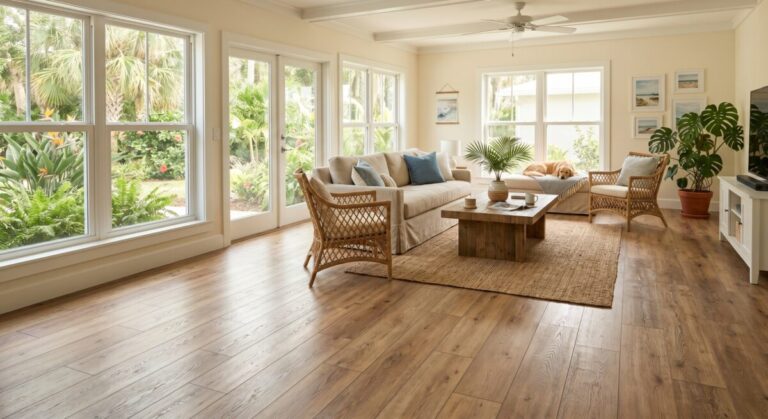
For Florida living rooms, a warm-base terrazzo tile in a 24×24 format reads as both current and deeply rooted in Florida design history. Pair it with rattan furniture, natural linen upholstery, and tropical plants for a room that feels genuinely local rather than inspired by a hotel lobby in Cancun.
From a maintenance standpoint, terrazzo-look porcelain has a significant advantage over original poured terrazzo: no grinding, no acid sensitivity, no annual sealing, and no risk of the staining that porous aggregate surfaces develop in a Florida kitchen-to-living-room open plan.
Installation consideration: Terrazzo-look tile with a polished or semi-polished finish shows footprints and water spots more readily than matte finishes. In a high-traffic living room that connects to a pool deck, a honed or matte terrazzo finish will serve you better day to day.
Idea 5: Herringbone and Pattern Tile for Entryways and Statement Zones
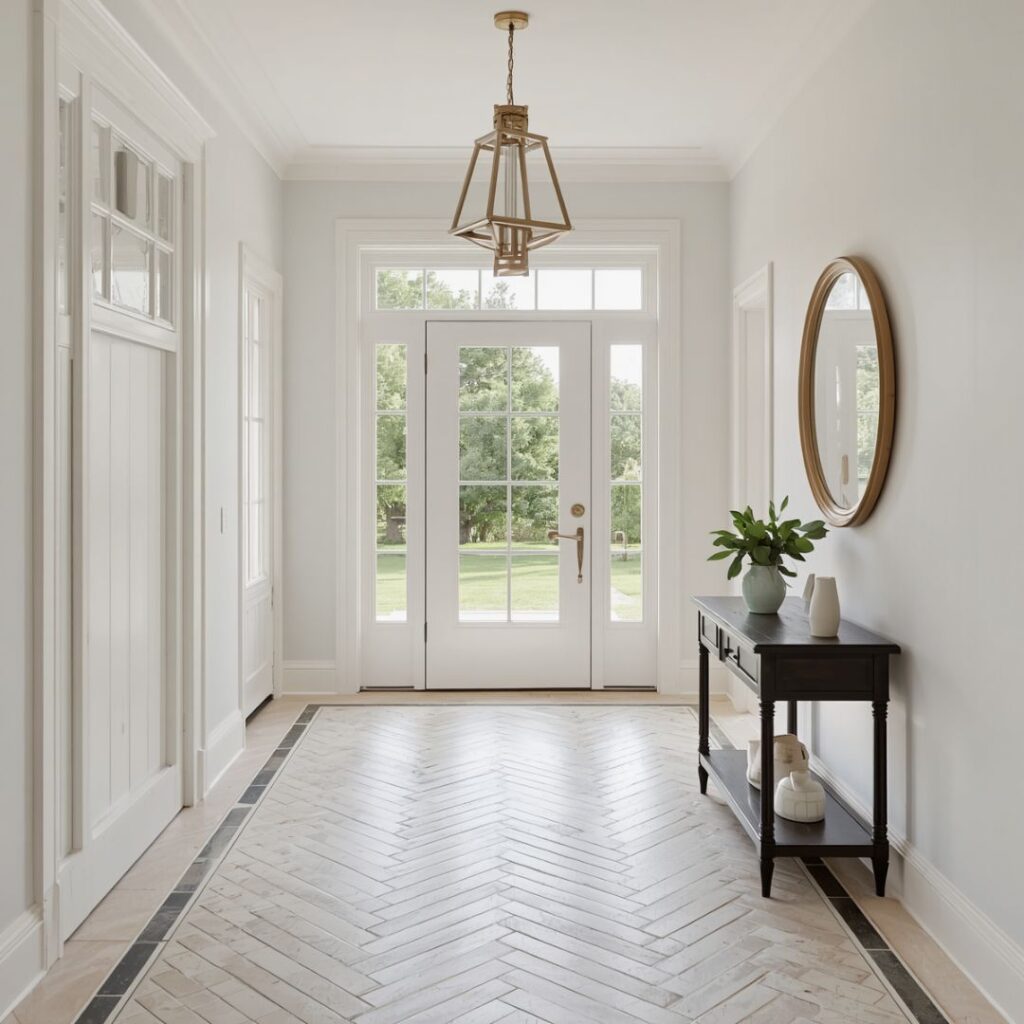
Florida open floor plans sometimes have the opposite problem: the space is so open that the living room has no clear visual identity. You walk in and see one continuous floor from the front door to the back wall of the kitchen with nothing to anchor the eye.
Pattern tile zones solve this beautifully.
The specific approach that works best in Florida homes is a “tile rug” layout: a bordered or patterned tile field in the center of the living area, surrounded by the large-format neutral tile that runs through the rest of the home. This technique defines the seating area without any furniture-moving or area rug maintenance, and it creates a custom, built-in look.
For entryways specifically, herringbone tile installation in a warm beige and cream checkerboard or a classic elongated herringbone pattern makes a strong first impression that still reads as Florida rather than Northern European. Chevron wood-look tile installation in the foyer is also increasingly popular in Tampa Bay new builds, especially in homes where the interior design is transitional and wood-toned.
The key to making pattern tile work in an open-plan Florida home is color restraint. Keep the pattern within one or two tones of the main floor tile. A two-tone herringbone in cream and warm sand next to a large-format greige tile reads as intentional and sophisticated. A high-contrast black-and-white checkerboard next to a warm travertine-look tile reads as jarring.
Explore Bob’s tile gallery to see pattern installations in completed Florida homes before you decide on your approach.
Living With Tile in Florida: The Maintenance Reality
Tile is the most low-maintenance floor category in this climate, but “low maintenance” does not mean zero maintenance. What you do in summer versus winter matters.
June through September: Florida’s wet season drives interior humidity up. Keep your home’s HVAC set to maintain indoor relative humidity between 40 and 60 percent. The NTCA notes that sustained humidity above 65% indoors accelerates grout discoloration and can soften certain grout formulations over time. A whole-home dehumidifier, or at minimum a portable unit for open living areas, is worth the investment in Florida homes.
Clean tile floors with a pH-neutral cleaner and a flat microfiber mop during the wet season. Avoid steam mops on porcelain tile: the sustained heat and moisture cycles can break down the grout binder and stress tile-to-adhesive bonds at the joints, which can void installation warranties.
October through May: Florida’s “dry” season still averages 45-55% relative humidity, so there is no period of dryness that threatens tile the way freeze-thaw cycles threaten Northern installations. This is tile’s strongest advantage in Florida: there is no seasonal threat to the tile body itself.
The one maintenance mistake that consistently shortens tile life in Tampa and Sarasota is delaying grout resealing on sanded grout installations. Non-epoxy sanded grout in a Florida living room with outdoor access should be resealed every 6-12 months, depending on foot traffic and proximity to pool or lanai areas. Epoxy grout costs more upfront and must be installed by an experienced professional (it has a short working time and strict temperature requirements), but it does not require sealing and outperforms cement grout in Florida’s high-humidity, high-traffic conditions.
One post-install step that protects your floor long-term: if you oversee your own installation, make sure your installer removes grout haze within 48 hours of grouting. On textured and matte tile finishes, dried grout haze locks into the surface texture and requires professional cleaning to remove cleanly.
The line between DIY and professional maintenance is grout. Surface cleaning is entirely DIY-friendly. Grout resealing is DIY-possible but often done incompletely. Grout replacement, or any grout that has cracked or pulled away from the tile edge, requires a professional. Partial DIY grout repairs frequently result in color mismatch and an unsatisfactory result.
“We went with a matte sand-colored tile and were not sure how it would look in person. It exceeded our expectations — it hides paw prints and the beach sand we track in constantly. Two years in, the floor still looks the way it did when it was installed.” — Verified customer, Gulf Gate Estates, Sarasota — Matte Porcelain Tile, Living Room
How to Choose a Tile Installer in Tampa or Sarasota (Without Getting Burned)
The tile installation market in Tampa Bay and Sarasota ranges from excellent to genuinely problematic. Here is a practical checklist for vetting any contractor:
Before you sign anything, ask:
- Will you do an in-person site visit before providing a final quote? Any installer who quotes remotely or over photos alone has not assessed your subfloor condition.
- Will you perform a calcium chloride or RH probe moisture test on the slab before installing? Skipping this step is the most common shortcut in the Florida tile market. A positive moisture reading changes everything: the adhesive choice, the need for a membrane, and sometimes the tile selection itself.
- What is your grout joint specification for large-format tile? TCNA guidelines allow a minimum 1/16-inch joint for rectified tile under ideal conditions, but for large-format sizes like 24×48, most manufacturers specify a minimum 1/8-inch joint to prevent lippage and cracking over Florida’s seasonal expansion cycles. Installers who push for tighter joints than this are setting up the job for failure.
- What warranty do you provide on installation labor, separate from the manufacturer’s material warranty? These are different. Material warranty covers defects in the tile; installation warranty covers the work. Vague answers here are a red flag.
- Are your installers CFI certified or equivalent? The Certified Flooring Installers program (CFI) is the industry credential that indicates verified technical training.
At Bob’s Carpet & Flooring, every project starts with an in-person site visit. We perform subfloor moisture assessment before any tile installation, and we use adhesives and grout formulations matched to the specific moisture profile of your slab. Our installation warranty is in writing and specific. After 55+ years in the Florida market across 17 locations, we have seen every subfloor condition this region produces, and we plan for it before the first tile is set.
Browse our full tile selection to explore what’s available before your visit.
FAQ: Tile Flooring in Florida Living Rooms
How much does it cost to tile a living room in Tampa or Sarasota?
For a typical Tampa Bay or Sarasota living room, budget $6.50 to $15.00 per square foot installed for standard porcelain tile, with premium large-format porcelain running $15.00 to $22.00 per square foot installed. A 400-square-foot living room in standard porcelain runs approximately $2,600 to $6,000. Natural stone-look porcelain at the mid-range, $7.50 to $16.00 per square foot installed, hits the sweet spot of aesthetics and performance for most Florida homes. Older slabs requiring leveling will add $400 to $800 to the total project cost.
Does Florida’s humidity cause tile to crack or fail?
Tile itself is not damaged by humidity. The risk in Florida comes from grout and adhesive failure caused by moisture vapor rising through the slab. Proper moisture testing and a vapor mitigation membrane where needed prevent this. According to the NTCA, porcelain tile installed over a properly prepared Florida slab with the correct adhesive system should perform for 20 to 30 years without structural issues. The failure points are almost always in the prep work, not the tile itself.
How long does a tile flooring project take from consultation to completion?
An average living room tile project in Tampa or Sarasota runs seven to ten business days from the start of installation. The timeline includes one to two days for subfloor prep and leveling (self-leveling compound requires a full 24-hour cure before tile can go down), two to three days for tile installation depending on square footage and pattern complexity, one day for grouting, and a 24-hour cure before light foot traffic. In Tampa Bay’s peak season (November through March), add two to three weeks for scheduling.
How do I know when my tile grout needs to be replaced versus just resealed?
Grout that looks dingy or discolored usually needs cleaning and resealing, not replacement. Use a pH-neutral enzyme-based grout cleaner rated for your specific grout type and a stiff nylon brush. Avoid bleach-based or acidic cleaners, which can discolor colored grout or etch the tile surface near the joints. Grout that is cracked, missing sections, or pulling away from tile edges needs to be replaced by a professional. In Florida, this typically becomes necessary in high-traffic areas after seven to ten years, less with regular sealing maintenance.
Is tile better than luxury vinyl plank for a Florida living room that opens to a pool deck?
For a living room with direct pool deck access, tile is the stronger long-term choice. Luxury vinyl plank (LVP) in SPC format is 100% waterproof and handles humidity well, but it will fade from UV exposure near large glass doors and will show abrasion from pool chemicals tracked inside over time. Porcelain tile is UV-stable, chemical-resistant, and can be used continuously from indoors to the pool deck with the right product selection. The tradeoff is that tile is harder underfoot and colder to bare feet in air-conditioned rooms. A common solution in Florida is tile for the areas with outdoor access and LVP for bedrooms and enclosed areas.
Ready to See These Ideas in Your Home?
Tile inspiration is everywhere. Finding tile that works in your specific home, on your specific slab, in Tampa or Sarasota’s subtropical climate, is a different exercise.
Bob’s Carpet & Flooring has been doing exactly that since 1969. We started in Bradenton and have grown to 17 locations across Tampa Bay because we know Florida homes and we stand behind every installation we do.
Visit the Tampa showroom at 625 N. Dale Mabry Hwy (813-513-3488) or the Sarasota showroom at 7261 S. Tamiami Trail (941-921-6092). No appointment needed. Bring your room measurements, your lanai photos, and your questions.
Prefer to see samples in your own light? Bob’s Shop at Home program brings the showroom to you, so you can evaluate tile colors and finishes against your actual walls, furniture, and Florida light before committing.
You can also explore financing options if you want to get the floor done right and spread the cost over time.
Read what Tampa Bay and Sarasota homeowners say about working with us, then get your free in-home estimate when you’re ready to move forward.
About the Author
Ashlie is the owner of Bob’s Carpet & Flooring, a family-owned flooring company founded in Bradenton, Florida in 1969 and now operating 17 showrooms across Tampa Bay and Central Florida. She represents the third generation of family leadership at Bob’s and has spent her career working alongside installers, manufacturers, and homeowners throughout the Tampa and Sarasota markets. Learn more about Bob’s story here.