Laminate vs. LVP Flooring in Florida: Which Is the Smarter Buy in 2026?
The price difference is real. Laminate typically costs less per square foot than premium LVP, and for a budget-conscious homeowner replacing flooring in a 1,500 sq ft Largo ranch home, that gap adds up. The question is whether the savings hold up over time — or whether Florida’s humidity eventually makes laminate the more expensive choice.
The honest answer is that it depends on which room, which climate conditions, and which product you’re comparing. Laminate isn’t wrong for Florida homes. But it’s wrong for more rooms than most buyers realize when they’re looking at the upfront numbers. Our team at Bob’s Carpet & Flooring (bobscarpetmart.com) on Missouri Ave in Largo has replaced enough laminate in Pinellas County homes to know exactly where it works and where it doesn’t. Book a free in-home estimate at bobscarpetmart.com/services/free-in-home-estimates and we’ll give you a direct answer for your specific rooms.
What’s Actually Different Between Laminate and LVP
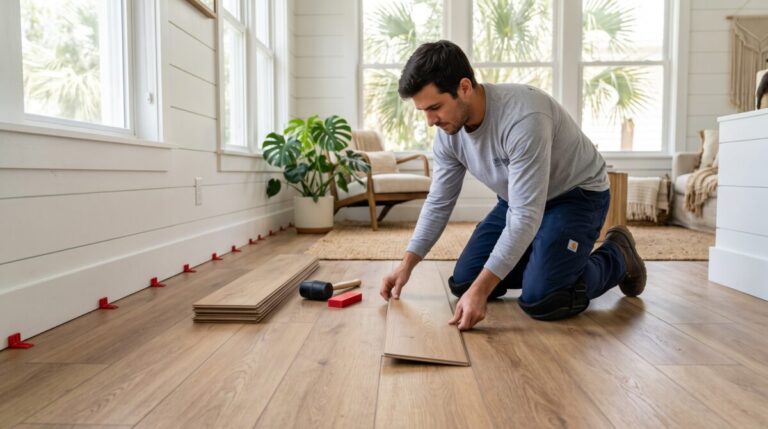
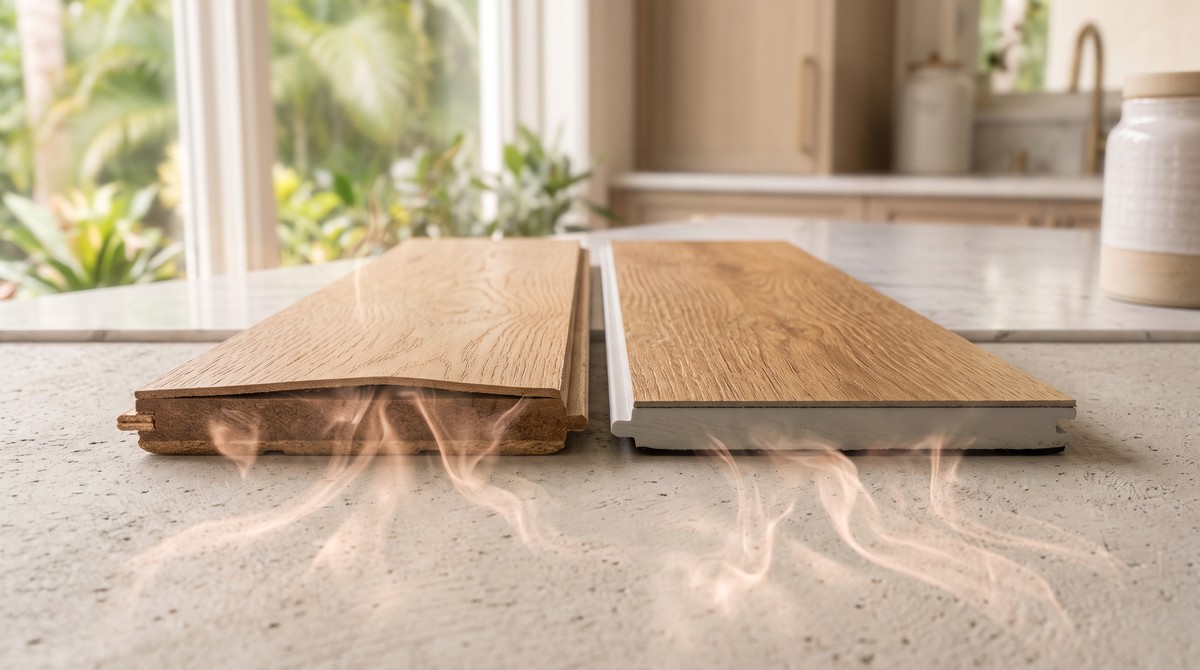
Both products look like wood and install similarly — click-lock floating systems over a prepared subfloor. The visual difference between mid-range laminate and mid-range LVP has narrowed considerably in the past five years; for most mid-range products, many homeowners find it difficult to distinguish them on appearance alone. The difference that matters in Florida isn’t visible. It’s in the core.
Laminate’s core is HDF — high-density fiberboard. HDF is a wood-based product that responds to moisture the way wood does: it absorbs it. Laminate’s top surface layer repels spills. That protection ends at the surface. Moisture that reaches the core through seams, edges, or from below through a concrete slab will cause the HDF to swell, buckle, and delaminate. That damage is permanent.
LVP’s core is synthetic. SPC (stone-plastic composite) rigid-core LVP is waterproof throughout the plank — top, bottom, and through the core. Liquid that reaches the seam of an SPC LVP plank doesn’t penetrate the material. WPC (wood-plastic composite) LVP is also technically waterproof, but its core contains wood-based foaming agents that some manufacturers note have reduced seam-level moisture performance with prolonged exposure. For Florida’s conditions, SPC rigid-core is the preferred LVP core type.
This core difference is manageable in a dry interior room in a climate-controlled home in a northern state. In Largo, with its coastal humidity, older slab stock, and year-round moisture load, it’s the central factor in every flooring recommendation we make.
Pro-Tip from the Bob’s Carpet & Flooring Team in Largo:
The moisture risk with laminate in a Largo home isn’t only about spills. Many older ranch homes in Largo — built in the 1960s and 1970s on original concrete slabs — emit moisture vapor upward through the concrete year-round. Even without a single liquid spill, ambient moisture vapor migrating through an unmitigated slab can reach the HDF core of a laminate floor from below, causing swelling and joint stress over time.
LVP’s synthetic SPC core is unaffected by this vapor migration — one of the reasons it has become the dominant product for Pinellas County slab-on-grade installations. We see this laminate failure mode most often in first-floor rooms of older Largo homes with no vapor barrier, typically eighteen months to three years after installation.
Where Laminate Actually Works in a Florida Home
Laminate isn’t automatically the wrong choice for every Florida room. In the right conditions, it’s a reasonable product that performs well.
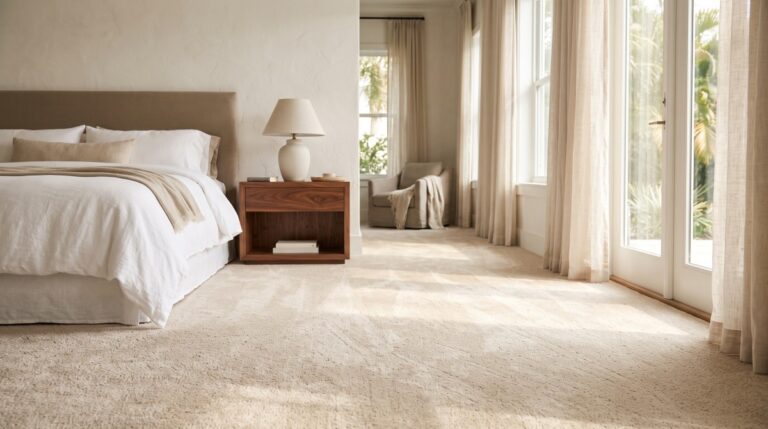
Bedrooms in climate-controlled homes. A bedroom in a Largo home with consistent air conditioning, no pets, and low moisture exposure is a legitimate use case for premium laminate. The AC controls indoor humidity below the threshold where HDF expansion becomes a problem, and the firmer underfoot feel of laminate — closer to real wood than most LVP — is an advantage in a bedroom where residents prefer a more solid surface.
Living rooms in older, stable homes. In a well-maintained Largo ranch home where the HVAC is reliable and the slab has been tested for moisture vapor emission, premium laminate with an AC4 or AC5 durability rating performs adequately in living rooms that don’t connect directly to kitchens or entryways.
Rental properties and short-term investments. In a Largo rental property where the goal is a budget-friendly floor that looks good for a few renovation cycles, laminate in dry rooms can be a reasonable choice, provided the installation avoids kitchens, bathrooms, and entryways.
The common factor: low or controllable moisture exposure, consistent climate control, and no direct connection to outdoor traffic or water sources.
Where Laminate Fails in a Largo Home
Kitchens. Dishwasher drips, refrigerator ice maker lines, steam from cooking, wet shoes tracked from the driveway — the accumulation of routine moisture events in a kitchen eventually reaches the laminate core. For SPC LVP, none of those events cause lasting damage. For laminate, a single extended moisture event can permanently damage a section of floor.
Entryways. Entryways in Largo homes absorb summer rain, wet sandals from Indian Rocks Beach, and Florida thunderstorm season in full force. Laminate in an entryway is a short-lived installation regardless of product rating.
First-floor rooms in older homes with unmitigated slabs. As the Pro-Tip describes, ambient moisture vapor from a 1960s or 1970s Largo slab — without any liquid event — will work into an HDF core through seams and edges over time. This is an under-discussed failure mode that is often misattributed to a phantom spill.
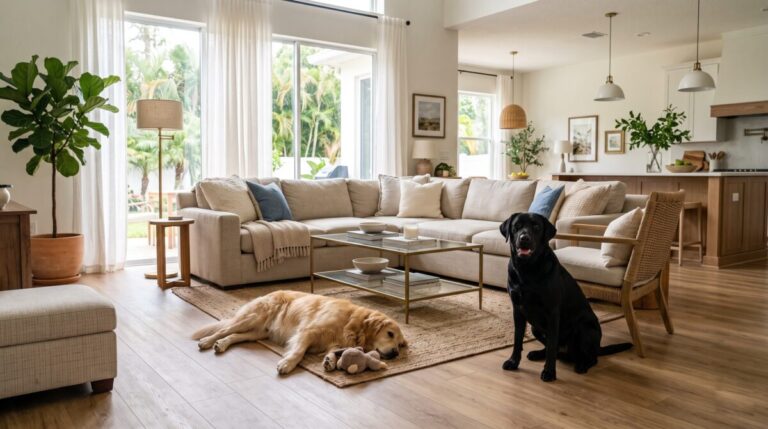
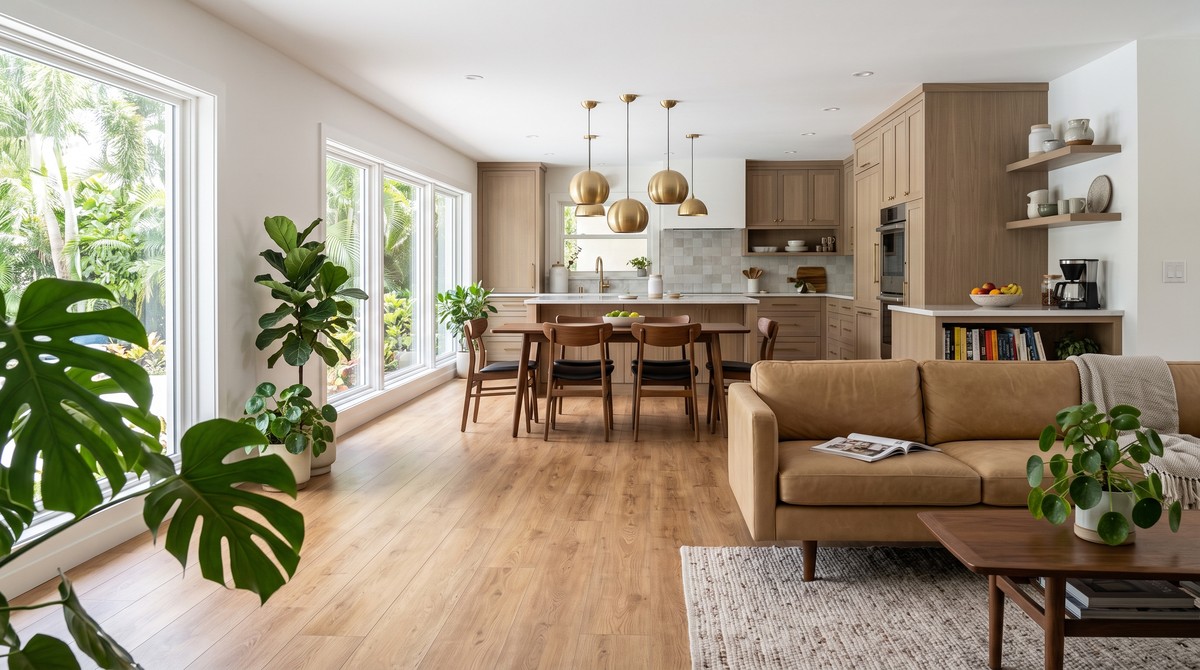
Open-concept homes where moisture and dry zones connect. In an open-concept Largo home where the kitchen, dining area, and living room flow together, you can’t install laminate in the dry zone and LVP in the wet zone without a transition strip — and transition strips introduce their own risks. The clean solution for open-concept Largo homes is one product throughout: LVP.
“We worked with Todd at the SR 70 location in Bradenton and we’re thrilled with our experience. We were encouraged to take samples home to view the options in our lighting and how they would look in the area. Our order came in quickly and we had our new laminate flooring installed within a week and a half.”
Anonymous Customer, Bradenton, FL — Laminate Flooring, Excellent Service
The 2026 LVP Advantage: The Gap Has Narrowed
In 2026, premium SPC LVP from Shaw Floors and Mohawk competes directly with mid-range laminate on visual realism — texture, embossing depth, grain variation. The acoustic quality and underfoot firmness of the very best laminate still holds a slight edge at the premium tier, which matters to some buyers in a primary bedroom or a home office. But the price gap that made laminate a compelling budget argument has narrowed considerably at the mid-range level. For most Largo homeowners comparing products in the same price tier, LVP’s moisture immunity is the deciding advantage with a smaller cost trade-off than it was five years ago.
How to Make the Right Decision for Your Largo Home
The 3-Question Decision Guide for Largo Homeowners:
1. WHERE IN THE HOME?
- Kitchen, bathroom, entryway, or open-concept main floor connecting wet and dry zones: LVP.
- Bedroom or low-traffic living room in a climate-controlled home with a stable subfloor: laminate is a reasonable option.
2. HOW OLD IS THE SLAB?
- Slab built before 1985: we test for moisture vapor emission before recommending either product. A moderate reading shifts the recommendation to LVP regardless of room type.
- Newer slab with confirmed vapor barrier: laminate becomes more viable in the appropriate rooms.
3. HOW LONG ARE YOU STAYING?
- Five to ten year ownership horizon: LVP’s moisture immunity makes it the lower long-term risk in Florida’s climate.
- Short-term flip or rental (2-3 year floor life acceptable in dry rooms): laminate may be appropriate in specific rooms.
Our Largo team gives you a direct answer based on your specific rooms and subfloor, not a generic comparison. Stop in at 311 Missouri Ave. N. or book a free in-home estimate and we’ll walk through it with you.
“My floors STILL look brand new. I have always been very happy with Bob’s Carpet.”
Long-time Tampa Bay Customer — Flooring Durability
Frequently Asked Questions: Laminate vs. LVP in Florida
Is laminate waterproof?
No. Laminate is water-resistant at the surface only — the top layer repels spills if cleaned promptly. The HDF core is not waterproof. Extended moisture exposure, seam penetration, or moisture vapor from a concrete slab will cause the core to swell and permanently damage the planks. Laminate warranties in Florida typically exclude moisture damage — a critical detail when comparing products partly on the basis of warranty coverage. SPC LVP is waterproof throughout the entire plank, including the core.
Does laminate work anywhere in a Florida home?
In the right conditions — a climate-controlled bedroom or living room with low moisture exposure and a stable, vapor-mitigated subfloor — premium laminate performs well. Rooms to avoid: kitchens, bathrooms, entryways, and any space in an older Largo home where slab vapor emission hasn’t been addressed. A subfloor moisture test during the free in-home estimate tells us which category your rooms fall into.
Is SPC LVP more durable than laminate underfoot?
In a Florida home, SPC LVP holds its size and shape better in humidity and temperature cycling than laminate’s HDF core. Surface scratch resistance is comparable at similar durability ratings. The durability advantage of SPC LVP in Florida is specifically about moisture stability — not about surface hardness, where laminate with a high AC rating performs similarly.
Can I mix laminate in bedrooms with LVP in the rest of the house?
Yes, with two practical considerations. First, a transition strip is required at every doorway between the two floating floors. For a clean, low-tripping-hazard transition, both products should be within approximately 1/8 inch of each other in thickness. Second, the laminate rooms must be fully isolated from moisture sources. For homeowners who want visual continuity throughout the home, one product throughout — LVP — is the simpler solution.
What happens to laminate if it gets moisture damage in a Largo home?
Affected planks swell, buckle, and in some cases delaminate from the locking system. Swollen laminate planks cannot be repaired — they must be replaced. If moisture reached the floor from below through a slab, the source must be addressed before replacement or the new laminate will fail in the same way. In the same scenario, SPC LVP is typically undamaged and requires only cleanup of any standing liquid.
If you’re comparing laminate and LVP for your Largo home and want an honest answer about which product is right for your specific rooms and subfloor, our team at 311 Missouri Ave. N. is available six days a week. Request a free in-home estimate online at bobscarpetmart.com/services/free-in-home-estimates or call 727-581-1004. We test the subfloor first and make a recommendation based on what we find.