Is Engineered Hardwood or LVP Better for Florida Homes? (2026 Guide)
You want real wood floors. You’ve seen them in the design magazines, walked across them in a model home, and pictured how they’d look stretching across your living room. The anxiety holding you back isn’t about aesthetics. It’s about Tampa Bay’s climate, and whether spending real money on wood floors is a mistake you’ll be living with for years.
Here’s what 57 years of installing floors in this market has taught our team at Bob’s Carpet & Flooring: the question isn’t which product is better in general. It’s which product is right for your specific subfloor, your specific rooms, and the way you actually live in Florida. Stop in to request a free estimate and we’ll start with your slab, not your style preferences.
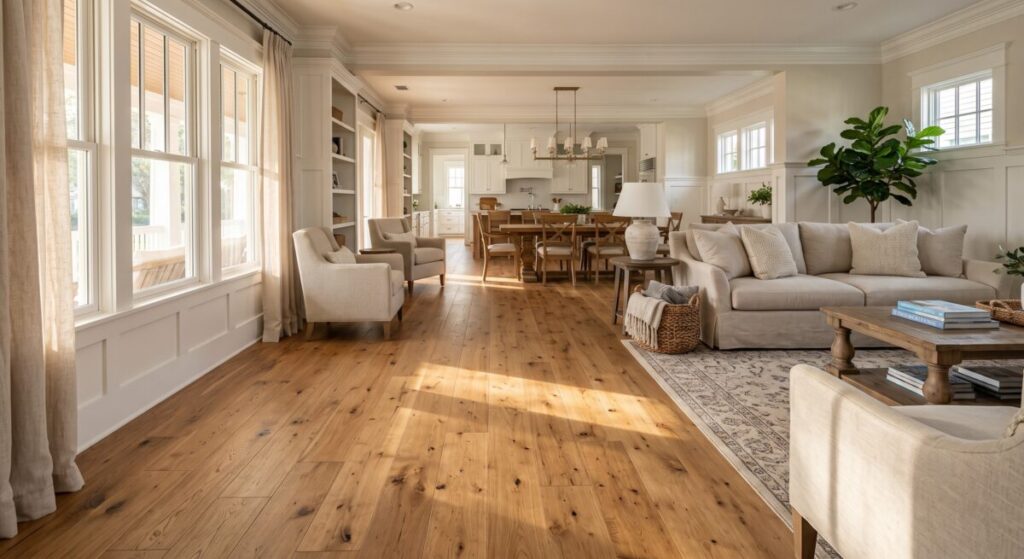
Why Tampa Bay’s Climate Changes This Decision
According to NOAA climate data, Tampa Bay averages relative humidity above 75% from June through September, with August peaks routinely exceeding 85%. Nearly all homes in Hillsborough County sit on concrete slab foundations. That combination, sustained high humidity plus a porous concrete subfloor, is the central fact that shapes every flooring recommendation we make.
Solid hardwood is not a viable option for slab-on-grade installation in this climate. Concrete migrates moisture vapor upward year-round, and in a Tampa Bay summer, that process accelerates significantly. Solid wood absorbs that vapor, swells, cups, and gaps. We’ve replaced enough of it in this market to say so directly.
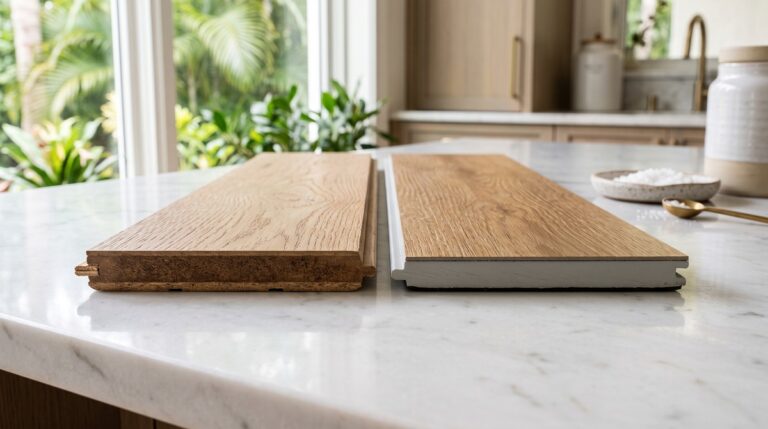
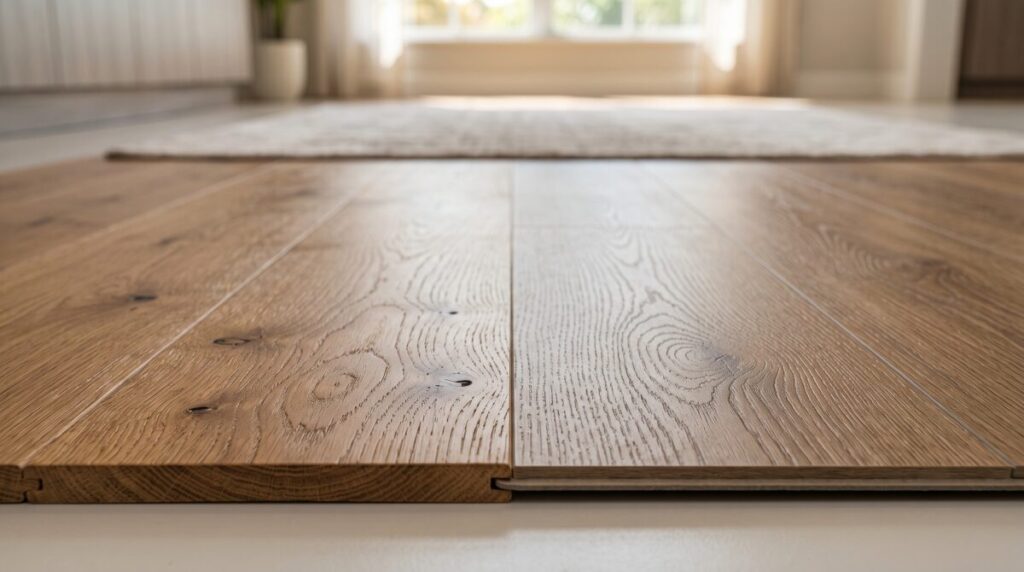
Engineered hardwood handles this better. Its cross-ply construction, typically an HDF or plywood core bonded in alternating grain directions, resists the expansion and contraction that destroys solid wood in high-humidity environments. The National Wood Flooring Association (nwfa.org) specifically designed installation guidelines for engineered hardwood over concrete and in climates with wider humidity swings, because the product was built with exactly these conditions in mind.
Luxury vinyl plank takes a fundamentally different approach. Its core, either SPC (stone-plastic composite, a rigid dense blend) or WPC (wood-plastic composite, a softer variation with better underfoot feel), does not absorb moisture at all. Premium LVP is completely waterproof throughout the entire plank. That’s a meaningful advantage in kitchens, bathrooms, and any room with direct slab contact.
Driving Dale Mabry through South Tampa and Carrollwood, you’ll notice older homes being renovated floor by floor. The conversation we have with those homeowners is the same every time: the soul of the home calls for real wood, but the slab says otherwise. Engineered hardwood is the answer that satisfies both sides of that debate.
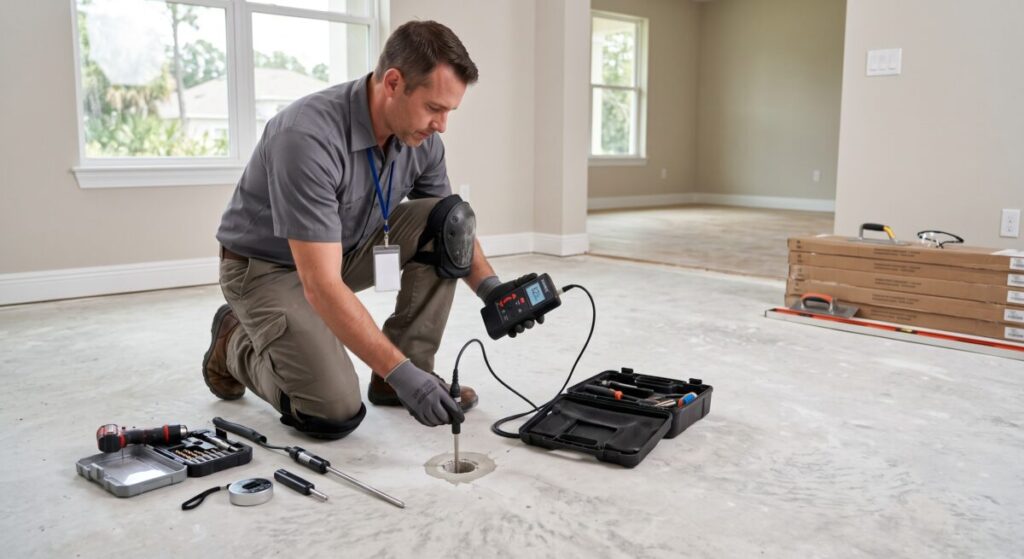
| Pro-Tip from the Bob’s Carpet & Flooring Tampa Team: In neighborhoods with older concrete slabs, including parts of Seminole Heights and North Hyde Park, we routinely measure moisture vapor emission rates before recommending any wood product. Slabs poured before 1990 often have no moisture barrier and can produce readings that exceed manufacturer guidelines. We test before we install, every time, using in-situ relative humidity probes per ASTM F2170, the current industry-preferred testing method. |
“The moisture test is the single conversation that changes the direction of almost every install in older Tampa neighborhoods,” says our Dale Mabry team. “Skipping it isn’t just a risk for the floor. It puts the whole project in question.”
Where Each Product Wins in a Tampa Bay Home
This is a room-by-room guide, not a generic comparison.
Living Rooms and Main Living Areas
For a slab-on-grade home with a functioning HVAC system that holds indoor humidity between 35% and 55% year-round, engineered hardwood is a beautiful and durable choice. Shaw Floors and Mohawk both carry wide-plank engineered collections in popular white oak and hickory tones that deliver the dimensional stability Florida demands. The grain variation, the acoustic quality, the way afternoon light plays across a real wood surface — these are qualities that LVP approximates but still doesn’t quite match.
Honestly, most people who choose LVP for the main living area are making the right call for their lifestyle, not a compromise. Mohawk’s LVP collections have become the dominant choice for new construction in Pasco and Hillsborough counties for good reason: waterproof performance, easy maintenance, and the ability to run continuously from kitchen through living area without any transition concerns. [CONFIRM WITH DEALER: specific Mohawk LVP collection name at the Dale Mabry location before publishing.]
Kitchens and Bathrooms
LVP wins here without argument. If you’re looking for waterproof flooring in these spaces, LVP is the correct answer. Standing water, steam, and damp mopping will eventually stress even well-installed engineered hardwood over time.
Bedrooms
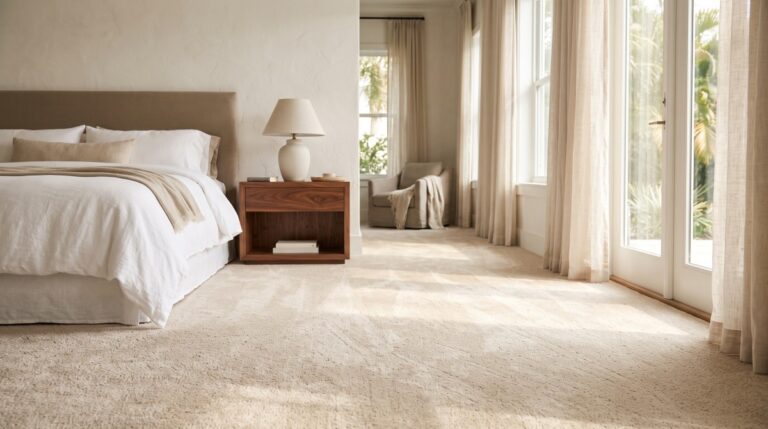
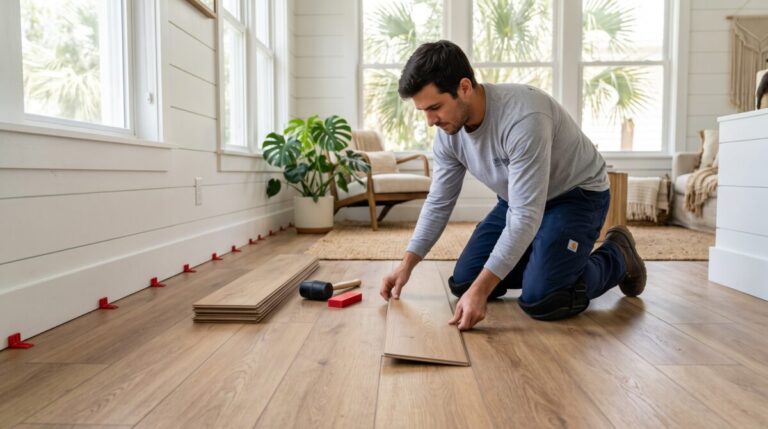
Both products work well in bedrooms. Many of our Tampa customers choose engineered hardwood specifically for the primary suite, for the warmth and visual richness it brings to the most personal room in the home. Here’s one detail that often gets skipped: engineered hardwood must acclimate in the installation environment for at least 48 to 72 hours before it is laid. Some manufacturers require five to seven days, especially for wider planks installed during humid summer months. Any installer who delivers the product and installs it the same day is accepting risk on your behalf.
Whole-Home Consistency
LVP makes a single continuous floor through an open-concept home entirely achievable because moisture zones don’t restrict it. Engineered hardwood in an open-concept layout requires planning around kitchen and bathroom transitions, but when done right, the result is a floor with depth and warmth that’s genuinely hard to match.
“The quality of work was 5 star, all joints, cuts and molding were done very tight and clean.”
Tampa Bay Homeowner, Flooring Installation
The Honest Tradeoffs
Refinishability. Engineered hardwood with a wear layer of 3mm or thicker can typically be sanded and refinished once, sometimes twice, over its lifetime. A floor installed today can look new again in 20 years. LVP cannot be refinished. When it wears, it must be replaced. In a home you plan to own for 20 or 30 years, this matters.
Acoustics and comfort. LVP muffles footfall sound better than wood and feels slightly softer underfoot. WPC-core is the softest; SPC-core is denser and firmer. In multi-story homes, the acoustic difference between LVP and engineered hardwood is real and noticeable without a good underlayment system under the wood.
Heat response. LVP expands with temperature changes. SPC-core handles this better than older formats, but proper expansion gaps are still required at all walls and thresholds. Florida rooms and south-facing spaces with significant sun exposure need extra attention here.
Resale value. In Tampa Bay’s upper-market neighborhoods, real wood floors still carry higher perceived value with buyers. A well-installed engineered hardwood floor in the main living area can return 70-80% of its cost at resale in a competitive listing, particularly in South Tampa, Carrollwood, and the Westchase corridor. That gap is narrowing as LVP quality has improved, but it’s still real at the higher price points.
“My experience with Bob’s Carpet Mart in Clearwater was excellent. The salesman worked within my budget and provided selections for a low, medium and higher price point. The installer did a fantastic job with difficult cuts around corners and tight spots.”
Tampa Bay Homeowner, Tile Flooring
Maintaining Your Floor in Tampa Bay’s Climate
Engineered hardwood needs a pH-neutral cleaner and a nearly dry mop. That phrase matters: nearly dry means wrung almost completely before touching the floor surface. Even small amounts of standing water left on an engineered hardwood surface will cause edge-swelling over time, even on properly finished floors. Most engineered hardwood today ships with an aluminum oxide finish, which provides solid abrasion and humidity resistance. Oil-finished options are beautiful but require more upkeep in this climate.
LVP maintenance is simpler by a meaningful margin. It handles damp mopping, forgives spills, and has no finish vulnerability in Tampa Bay’s humidity. That’s a real quality-of-life difference for pet owners and families with young children.
That said, the single most effective floor protection strategy for either product is a quality doormat at every entry point, and an HVAC system that keeps indoor relative humidity consistently below 55%.
What to Ask Any Flooring Installer Before You Commit
Ask one question: will you test my subfloor for moisture before the install? If the answer is no, keep looking.
A proper moisture assessment uses in-situ relative humidity probes per ASTM F2170, the current manufacturer-preferred testing standard for engineered hardwood installations. The calcium chloride test (ASTM F1869) is an acceptable alternative. Any installer skipping this step is accepting risk on your behalf, and when floors gap six months after install, the dispute about responsibility becomes complicated fast.
Bob’s Carpet & Flooring has installed Mohawk and Shaw products for decades partly because their warranty terms align with the installation standards we already follow. A manufacturer’s warranty only protects you if the floor was installed correctly to begin with.
Red flags in any quote: no in-person site visit, no moisture reading, vague warranty language that doesn’t address subfloor moisture, or any contractor who tells you solid hardwood over a Florida slab is fine.
FAQ: Engineered Hardwood vs. LVP in Tampa Bay
Can engineered hardwood really hold up in Florida’s humidity?
Yes, with the right product and a properly prepared subfloor. The critical variables are core construction (HDF or cross-ply plywood outperforms lower-density cores in moisture stability), veneer thickness (thicker veneers are more stable and refinishable), and whether the installer tested your slab before the first plank went down. The NWFA recommends maintaining indoor relative humidity between 35% and 55% for wood floors, achievable in any climate-controlled Florida home with a functioning HVAC system.
What happens if LVP gets too hot in a Florida room or near a south-facing window?
Standard LVP is rated to a surface temperature that most air-conditioned interior spaces never reach. The risk comes in unconditioned spaces like screen-enclosed lanais or rooms with poor HVAC coverage, where dark-colored floor surfaces in a Florida summer can approach temperatures that cause SPC cores to expand. SPC rigid-core handles heat better than WPC-core, but in truly unconditioned outdoor-adjacent spaces, porcelain tile is the more appropriate long-term choice.
Is engineered hardwood significantly harder to maintain than LVP in Florida?
Slightly, but not dramatically for most households. Engineered hardwood requires a drier mop and a pH-neutral cleaner. LVP accepts damp mopping and is more forgiving with spills. In Tampa Bay’s humid summers, consistent air conditioning and entry-point doormats do more to extend floor life than any cleaning product. If you have pets or small children, LVP is the clearer maintenance choice.
Which floor adds more resale value to a Tampa Bay home?
In Tampa Bay’s mid-to-upper residential market, engineered hardwood still carries higher perceived value with buyers, particularly in South Tampa, Carrollwood, and Westchase. A well-installed engineered hardwood floor in the main living area can return 70-80% of its cost in a competitive listing. That gap is narrowing as LVP quality improves, but it remains real at the higher price points.
How long does engineered hardwood need to acclimate before installation in Florida?
Most manufacturers require a minimum of 48 to 72 hours of acclimation in the installation environment before laying begins. In Florida’s high-humidity summer months, some manufacturers recommend five to seven days, especially for wider planks. Your installer should follow the specific manufacturer guidelines for the product being installed. Skipping acclimation in Tampa Bay’s climate is one of the most common causes of post-installation gapping.
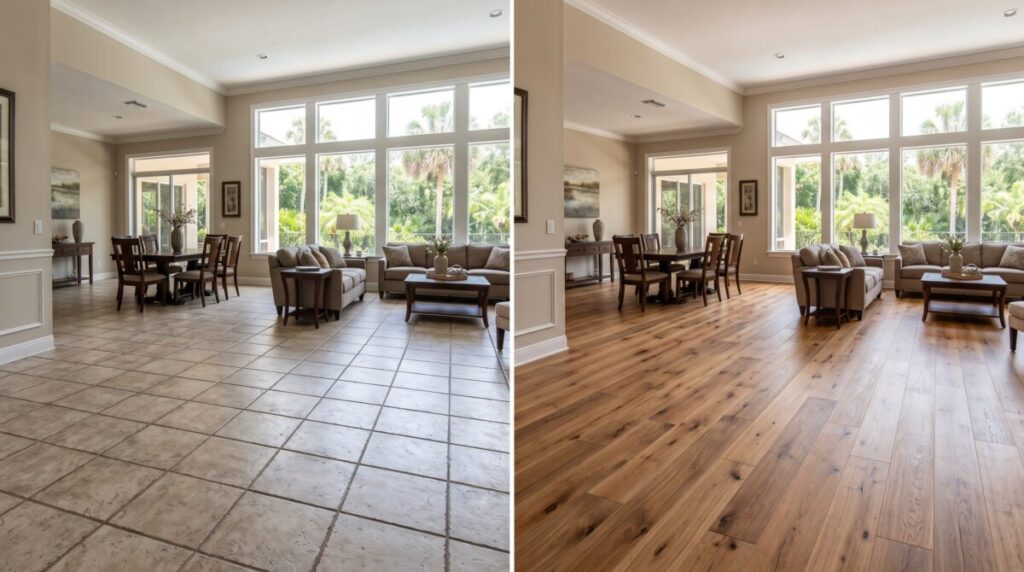
Before your visit, try the Roomvo Flooring Visualizer on our website to see engineered hardwood and LVP options in a photo of your actual room. Upload your space and compare before you ever walk through our door.
Our Tampa team at 625 N. Dale Mabry Hwy, Ste B offers free in-home estimates six days a week. We start with your subfloor because that’s where the decision actually lives. Request your free estimate online or call us at 813-513-3488. No appointment needed to stop in.